TREATMENT OF AN ENLARGED PROSTATE IN NIGERIA
Treatment of an enlarged prostate in Nigeria is currently one of the commonest searches online todat. An enlarged prostate, medically known as Benign Prostatic Hyperplasia (BPH), is a common condition that can affect men as they grow older. It can cause difficulty urinating, a weak urine stream, frequent urination, waking several times at night to urinate, urinary urgency, dribbling and incomplete bladder emptying.
Depending on the severity of symptoms and the patient’s condition, treatment may include lifestyle adjustments, medication or minimally invasive prostate procedures.
What Is an Enlarged Prostate?
The prostate is a small gland located below the bladder in men. The urethra, the tube that carries urine from the bladder out of the body, passes through the prostate.
As men age, prostate tissue can gradually increase in size. When the prostate becomes enlarged, it can narrow or obstruct the urethra and make it more difficult for urine to pass normally.
This condition is called Benign Prostatic Hyperplasia, or BPH.
BPH is different from prostate cancer. An enlarged prostate does not automatically mean that a man has cancer. However, urinary symptoms can have several causes, so persistent or troublesome symptoms should be assessed by a qualified medical professional.
Symptoms of an Enlarged Prostate
Symptoms of BPH can develop gradually. Some men initially experience mild urinary changes, while others develop significant obstruction that affects sleep and everyday life.
Common symptoms include:
- Difficulty starting urination
- Weak urine stream
- Slow urine flow
- Frequent urination
- Frequent urination at night
- Sudden or urgent need to urinate
- Stopping and starting while urinating
- Dribbling after urination
- Feeling that the bladder has not emptied completely
- Straining to urinate
- Difficulty maintaining a normal urinary flow
- Urinary retention
Some men may have significant symptoms without having an extremely large prostate, while others may have a substantially enlarged prostate with relatively mild symptoms.
For this reason, prostate size alone does not determine treatment.
When Should You See a Urologist for an Enlarged Prostate?
You should consider seeing a urologist when urinary symptoms persist or begin interfering with normal activities.
It is particularly important to seek medical evaluation if you:
- Wake repeatedly at night to urinate
- Have difficulty starting urination
- Have a progressively weaker urine stream
- Frequently feel that your bladder has not emptied
- Experience recurrent urinary infections
- Have blood in your urine
- Have previously experienced urinary retention
- Need to strain significantly to urinate
- Have symptoms that are affecting your quality of life
A man who suddenly becomes unable to pass urine requires prompt medical attention.
Early evaluation can help identify the cause of the symptoms and determine whether monitoring, medication or a procedure is appropriate.
How Is an Enlarged Prostate Diagnosed?
Before recommending treatment, a Urologist needs to evaluate the patient’s symptoms and determine whether BPH is responsible.
Depending on the patient’s situation, evaluation may include:
- Medical history
- Physical examination
- Investigations
Which will include
- Urinalysis
- Urine Culture
- Prostate Specific Antigen ie PSA
- Kidney Function Test
- Full blood count
- Ultrasound Scan to determione the size of the prostate
- Uroflowmetry
- Other investigations where necessary
- Digital Rectal Examination- The Urologist inserts his finger into the rectum to check how the prostate feels.
The purpose of the assessment is not simply to determine whether the prostate is enlarged. The urologist also needs to determine whether there is significant urinary obstruction, bladder dysfunction, infection or another condition causing the symptoms.
Treatment of an Enlarged Prostate in Nigeria
The treatment for an enlarged prostate in Nigeria just like any other location depends on the severity of symptoms, prostate size, urinary obstruction, complications and the patient’s overall health.
Treatment options can include:
- Lifestyle adjustments
- Watchful waiting or monitoring
- Medications
- TURP
- Bipolar enucleation
- ThuFLEP
- HoLEP
- Other minimally invasive or surgical approaches
There is no single treatment that is appropriate for every man.
The Urologist assesses the individual patients before recommending a treatment option.
Medications for an enlarged prostate
Taking medicine is the most common treatment for mild to moderate symptoms of an enlarged prostate. Options include:
- Alpha blockers. Alpha blockers work by relaxing the smooth muscle of the bladder neck and prostate. This makes peeing easier. Alpha blockers include alfuzosin, doxazosin, tamsulosin, silodosin and terazosin. They often work quickly in people with somewhat smaller prostates. Side effects might include dizziness. They also may include a harmless issue in which semen goes back into the bladder instead of out the tip of the penis. This is called retrograde ejaculation.
- 5-alpha reductase inhibitors. These medicines shrink the prostate. They do this by preventing hormone changes that cause the prostate to grow. Examples include finasteride and dutasteride. They might take up to six months to work well and can cause sexual side effects.
- Combination therapy. Your health care provider might suggest that you take an alpha blocker and a 5-alpha reductase inhibitor at the same time if either medicine alone doesn’t help enough.
- This medicine is often used to treat erectile dysfunction. Studies suggest it also can treat an enlarged prostate.
Surgery and other treatments for an enlarged prostate
Surgery or other procedures might help with BPH symptoms if you:
- Don’t get enough relief from medicines.
- Prefer not to try medicine.
- Aren’t able to pee.
- Have kidney problems.
- Keep getting bladder stones, blood in the urine or UTIs.
Surgery or other procedures might not be an option if you have:
- An untreated urinary tract infection.
- Urethral stricture disease.
- A history of prostate radiation therapy or urinary tract surgery.
- A neurological disorder, such as Parkinson’s disease or multiple sclerosis.
Any type of prostate procedure can cause side effects. Depending on the procedure you choose, health issues afterward might include:
- Semen flowing backward into the bladder instead of out through the penis during ejaculation.
- Leaking urine by accident.
- Urinary tract infection.
There are many types of surgeries and other procedures that can treat an enlarged prostate.
Transurethral resection of the prostate (TURP)
A thin tool with a light, called a scope, is inserted into the urethra. The surgeon removes all but the outer part of the prostate. TURP often relieves symptoms quickly. Some people have a stronger urine flow soon after the procedure too. After TURP, you might need a catheter to drain your bladder for a little while.
Transurethral incision of the prostate (TUIP)
A lighted scope is inserted into the urethra. The surgeon makes one or two small cuts in the prostate gland. This makes it easier for urine to pass through the urethra. TUIP might be an option if you have a small or slightly enlarged prostate gland. It also may be an option if you have health problems that make other surgeries too risky.
Bipolar Enucleation Of The Prostate
This procedure is meant for the very big prostates. It involves a complete peeling of the enlarged prostate from its capsule using a bipolar energy.
Laser therapy
A high-energy laser destroys or removes overgrown prostate tissue. Laser therapy has a lower risk of side effects than does nonlaser surgery. It might be used in people who shouldn’t have other prostate procedures because they take blood-thinning medicines.
Laser therapy options include:
- Enucleative procedures. This is the best method for handling prostates especially the very big once. The enucleative process makes for a complete clearance of the enlarged prostate. These treatments include Thulium Fiber Laser Enucleation Of the Prostate(ThuFLEP) which is the lattest of the LASER techniques for removing the enlarged prostate, Holmium laser enucleation of the prostate (HoLEP). In general, they remove all the prostate tissue blocking urine flow and prevent tissue from growing back. The removed tissue can be checked for prostate cancer and other health problems.
- Ablative procedures. These destroy prostate tissue that blocks urine flow. Types of these procedures include photoselective vaporization of the prostate (PVP) and holmium laser ablation of the prostate. Ablative procedures can cause irritating symptoms after surgery. In rare cases, another procedure to remove prostate tissue might be needed at some point.
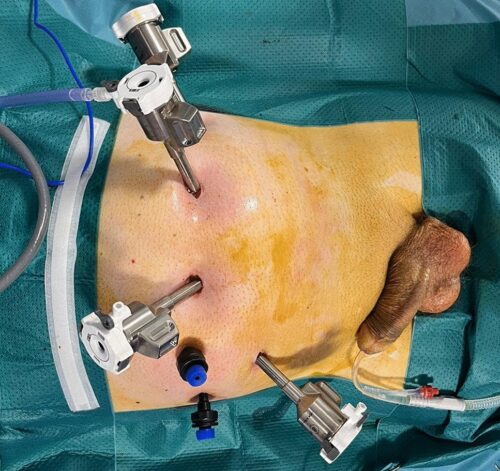
Open or robot-assisted prostatectomy
One or more cuts are made in the lower stomach area. This lets the surgeon reach the prostate and remove tissue. In general, this type of surgery is done if you have a large or very large prostate. A short hospital stay is often needed afterward. The surgery is linked with a higher risk of needing donated blood due to bleeding.
Follow-up care
Your follow-up care will depend on the technique used to treat your enlarged prostate. Your health care provider should tell you what activities to stay away from and for how long.
Treatment at Eleos Specialist Hospital
Our Urologists have training in a wide range of state-of-the-art technology to treat an enlarged prostate. You have access to the latest noninvasive laser treatments, including ThuFLEP, HoLEP and Bipolar Enucleation. Your Eleos Hospital care team will explain the range of treatments available and help you choose the best approach based on your symptoms.
Our Hospitals are located in Abuja and Umuahia Abia State Nigeria and these services are available.
You can watch these videos for more